Skydiving: 5 Proven Tips for Hot and Cold Weather
Skydiving. Most Indian first-timers research the skydiving experience thoroughly.
They research the safety framework. They research altitude, freefall duration, parachute system, and instructor qualifications. They arrive at Skyhigh India‘s Narnaul drop zone in Haryana better informed than five years ago.
Furthermore, the weather at Skyhigh India‘s Narnaul drop zone varies considerably across the operational calendar. The September to February peak season delivers cool to cold ground temperatures and genuinely cold freefall conditions at altitude. The March to May spring window delivers warm ground conditions and comfortable altitude temperatures. The August shoulder season delivers transitional conditions that combine warmth with the specific atmospheric quality of the post-monsoon transition.
Each seasonal window at Narnaul requires specific preparation. The six tips in this guide apply to the skydiving conditions faced by Skyhigh India‘s Narnaul first-timers year-round.
1. Layer Strategically Not Bulkily for Cold Weather Skydiving at Narnaul

The first proven tip for cold-weather skydiving at Skyhigh India‘s Narnaul drop zone is the most impactful yet often misapplied.
Layer strategically. Not bulkily. Excessive bulky layering creates two specific problems for the Narnaul skydiving first-timer.
Base layer thermal compression. A fitted thermal compression top and thermal leggings worn directly against the skin. Wool or synthetic thermal fabric. Close-fitting, not loose. This layer traps body heat against the skin throughout the ground training session, the aircraft ascent, the freefall, and the canopy ride above the Narnaul plains.
Mid-layer insulating fleece. A fitted fleece top over the thermal base layer. Not a thick wool sweater. A mid-weight fleece close enough to the body to sit cleanly under the harness, warm enough to provide meaningful insulation during the aircraft ascent and freefall.
Outer layer: the Skyhigh jumpsuit. Provided at the Narnaul drop zone. Worn over both thermal and fleece layers. The Skyhigh India jumpsuit offers complete cold weather protection for Narnaul skydiving without the bulk of harness-fitting issues.
2. Protect the Extremities Hands, Ears, and Neck for Cold Skydiving at Narnaul
Hands. Thin, fitted liner gloves the type worn as a base layer under ski gloves are the ideal hand protection for cold weather skydiving at Narnaul. They are thin enough to maintain tactile awareness without the bulkiness that thicker gloves produce. They fit under the Skyhigh India jumpsuit’s sleeves. And they provide meaningful wind protection during the sixty seconds of terminal velocity freefall above the Haryana plains.
Ears. A thin neoprene or fleece under-helmet balaclava covering the ears, the back of the neck, and the lower face worn under the Skyhigh India helmet. Available at most outdoor gear suppliers in Delhi NCR for ₹300 to ₹800. This is the single most impactful cold weather accessory for Narnaul skydiving in December and January.
Neck. A fitted buff or tube scarf worn around the neck and tucked into the base layer fills the gap between the jumpsuit collar and the helmet. Prevents the cold air ingress during freefall that the neck gap creates without the bulk of a conventional scarf that would interfere with the harness fitting.
3. Dress Light and Breathable for Hot Weather Skydiving at Narnaul
The third tip is for first-time skydivers at Skyhigh India‘s Narnaul drop zone during warm months (March, April, May, September).
Cotton absorbs moisture and holds it. During Skyhigh India‘s 45-60 minute ground training in Narnaul on a warm March or April morning, a cotton base layer becomes damp. Damp cotton during the aircraft ascent becomes cold. Cold, damp cotton at high altitude is more uncomfortable than the first-timer anticipated.
Lightweight fitted bottoms. Fitted athletic tights or lightweight fitted trousers not loose joggers, not jeans, not shorts. The jumpsuit fits over any base layer, causing comfort and mobility issues in warm weather, similar to bulk layering in cold weather. Fitted athletic bottoms are the warm weather equivalent of the cold weather thermal compression layer.
4. Protect Sun Exposure for Hot Weather Skydiving at Narnaul
The fourth tip is about warm weather skydiving at Skyhigh India‘s Narnaul drop zone, focusing on an aspect first-timers often overlook during March or April morning training.
Sun exposure.
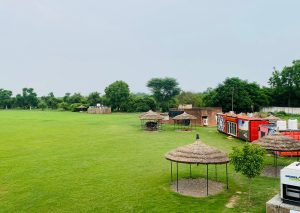
The Narnaul drop zone is an open facility. The ground training session is conducted partly outdoors. The post-jump debrief, the video review, moment all happen at the landing field under open sky. From March to September, Narnaul’s full jump day offers significant sun exposure, especially for NCR first-timers with less outdoor time.
Furthermore, the altitude dimension of warm weather skydiving sun exposure at Narnaul is the one that most surprises first-timers. At 10,000 feet above the Haryana plains, the UV index is approximately forty to fifty percent higher than at ground level. The atmosphere at altitude filters less ultraviolet radiation.
Many first-timers apply sunscreen before skydiving in Narnaul, mainly on the nose, cheeks, and tops of hands. The neck, ears, and area around the eyes are often underprotected and notably exposed during freefall over the Narnaul plains.
SPF 30 to 50 on all exposed skin. Applied at least thirty minutes before the start of the ground training session at Narnaul. Not just the face neck, ears, back of hands, and any other area that the jumpsuit does not cover. Reapply at the post-jump stage if the day continues outdoors.
Wrap sunglasses. A pair of wrap or sport sunglasses that sit securely against the face during the aircraft ascent and the early stages of the jump preparation. Note goggle-style eye protection is provided by Skyhigh India at the Narnaul drop zone for the freefall itself. The wrap sunglasses are for the ground period and the aircraft ascent. Remove them at the aircraft door and hand them to a Skyhigh India team member before exit.
Lip protection. SPF lip balm applied before ground training at Narnaul. The combination of altitude UV and freefall wind can leave lips significantly more chapped after a warm weather skydiving jump than the first-timer expects. A simple SPF lip balm applied before ground training addresses this entirely.
5. Hydrate Specifically for the Season You Are Jumping In
The fifth tip for skydiving at Skyhigh India‘s Narnaul drop zone focuses on a preparation aspect that first-timers often mismanage.
The relationship between hydration and the skydiving experience at Narnaul is season-dependent in specific ways that generic hydration advice does not capture.
Cold weather at Narnaul can increase the under-hydration risk.
Cold weather reduces the thirst sensation. Most first-time Indian jumpers at Skyhigh India‘s Narnaul drop zone in December or January drink less due to cold temperatures suppressing thirst and pre-jump anxiety shifting focus away from hunger and thirst cues.
Mild dehydration amplifies anxiety, reduces cognitive clarity, and increases the perceived discomfort of cold weather during the freefall. All three of these effects reduce the quality of the skydiving experience at Narnaul.
Hot weather hydration at Narnaul: the over-restriction risk.
The hot weather hydration mistake is the opposite. First-timers often limit fluid intake before Narnaul skydiving, mistakenly thinking it reduces nausea risk.
This is incorrect. Dehydration does not reduce nausea for many. It increases it. A first-timer at Skyhigh India‘s Narnaul drop zone in May, arriving dehydrated after two and a half hours in a hot car, is more prone to nausea during freefall due to increased vestibular sensitivity.
FAQs
What should I wear for cold-weather skydiving at Skyhigh Narnaul?
For cold-weather jumps from October to February, wear a fitted thermal compression base layer, a slim fleece mid-layer, thin liner gloves, a neoprene or fleece under-helmet balaclava, and a snug neck buff. Avoid bulky coats, loose hoodies, or heavy sweaters, as they restrict movement and interfere with proper harness fitting.
What should I wear for hot weather skydiving at Skyhigh Narnaul?
During warmer months (March to May and September), opt for a fitted moisture-wicking performance top paired with athletic leggings or lightweight athletic trousers. Avoid heavy cotton shirts, as they absorb sweat during ground training and become uncomfortably cold at altitude. Remember to apply high-SPF sunscreen to any exposed skin before ground instruction begins.
How cold is skydiving freefall at Skyhigh Narnaul in winter?
In December and January, ambient temperatures at 10,000 feet hover between -7°C and 3°C. Combined with a freefall speed of roughly 200 km/h, the wind chill factor drops perceived temperatures by an additional 15°C to 20°C. Proper strategic layering—thermal base, fleece mid-layer, and your provided Skyhigh jumpsuit—keeps you completely comfortable throughout the jump.
Should I eat before my skydiving jump at Skyhigh Narnaul?
Yes. For winter jumps, eat a moderate, familiar, warm meal about 2 to 2.5 hours prior to arrival. For summer jumps, eat a light meal 3 hours beforehand. Avoid large, heavy, greasy, or overly spicy foods prior to flying. Alcohol consumption is strictly prohibited for at least 24 hours before your scheduled jump.
More of Us